Blogia

Los "Jabalíes" Cortes Rugby

Partido de presentacion....

Partido de presentacion....

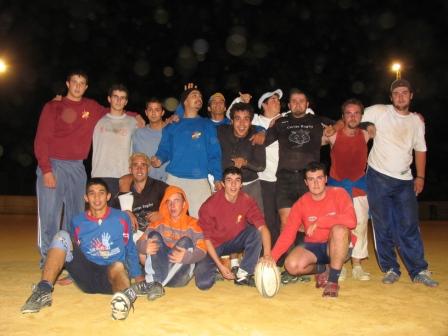
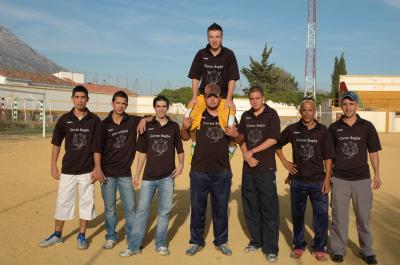
Hola amigos, he pensado que podríamos celebrar un partido de presentación oficial en Cortes de la Frontera, ante la imposibilidad de poder jugar con otos equipos, pues ellos están en liga y jugar un partido amistoso a estas altura les es difícil.

Ellos nos invitan a entrenar con ellos, pero ya sabéis lo que significa eso, los entrenamientos son por la tarde y el desplazamiento corre de nuestra cuenta.

De todos modos, podemos ir a verlos jugar, que suelen ser los sábados y domingos por la mañana, se aprende mucho y ya vamos conociendo a la gente, podemos preguntar a los jugadores y aprender con ellos.

Comentarlo con los que no pueden leer el blog, nos vemos el miércoles.

P.D.- Comentar los articulo y escribir algunos vosotros.

                                                                            Inglés


Hello friends, I thought we could hold an official party Cortes de la Frontera, faced with the impossibility of being able to play with other teams, as they are in league and playing a match at this altitude them is difficult.

They invite us to train with them, but you already know what that means, are training in the afternoon and displacement runs on us.

Anyway, we go to see them play, which are often on Saturday and Sunday mornings, we learn a lot and we already knowing the people, we can ask the players and learn with them.

Comment by those who can not read the blog, we are on Wednesday.

To comment on the article and PS-write some of you.


Foto con dedicatoria.

Foto con dedicatoria.

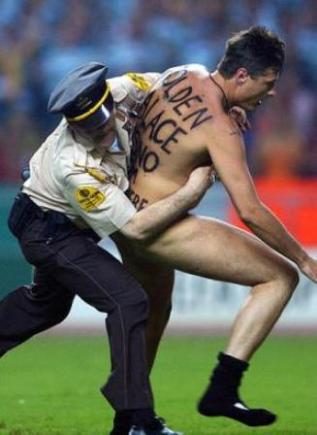
Esta foto esta dedicada a nuestro amigo Andy, una foto de mi hermana la pequeña...jijij

P.D.- Alguien ha dejado un comentario en el artículo anterior, menos mal, aunque algo ridículo. iaiaia.

INGLÉS

This picture is dedicated to our friend Andy, a picture of my little sister ... jijij

PS Someone has left a commentary in the previous article, less evil, but something ridiculous. Iaiaia.


Lo no visto...

Lo no visto...

Fotos no vistas, poco a poco, ire colgando fotos no vistas, para que os podais ver por el blog....Saludos.

Deliberaciones.............

Deliberaciones.............

Se necesita tener cabeza para entender el rugby, porque...¿ como puede explicarse que 15 hombretones de 70 a 120 Kg. traten con esa delicadeza y defiendan con todo su cuerpo y alma, aun a costa de romperse los hueso, una pelota que se les escapa de las manos? una frase de Oscar Wilde muy famosa dice que " El rugby sirve para tener 30 energúmenos fuera de la ciudad el fin de semana.." claro está que éste señor no entendía nada de nada.
Hay otra frase mejor todavía, de Serge Blanco creo que es (ex-jugador francés) que dice:"Jugar al rugby es como hacer el amor, hay que pensar mas en el placer del otro que en uno mismo".
Eso es el rugby, compañerismo, solidaridad, coraje, garra, fuerza mental y física, entereza moral y mucho, mucho orgullo de portar la camiseta.
No es fácil entender las reglas del rugby, sobre todo porque son tantas, pero son necesarias, al ser un juego de tanto riego, se deben tener muchas reglas para que nadie se lastime, aunque claro, eso es poco probable.
Cuando  empecé  a jugar al rugby todos me decían "¿como puede ser que te guste que te pisen la cabeza?" y yo respondía "no entiendes  nada", la verdad es que aun no se como se juega del todo bien, pero una cosa entendía inmediatamente; se necesitan 14 hombres para que uno haga el ensayo (try) y eso inevitablemente los lleva a la solidaridad y al juego de equipo, algo que a mi me parece ideal.
En países como Nueva Zelanda, Australia, Inglaterra, Francia, Escocia, Gales, etc.. el rugby se respira en cada rincón de la ciudad, cada partido se vive como si fuera el último, y se sufre como podría sufrir uno que sigue al Real Madrid o al Barcelona por darles algún ejemplo futbolero.
Estos jugadores de rugby viven por y para el juego, no ganan tanto dinero claro está como ganan los de fútbol, pero la profesionalidad es la misma o tal vez mayor, ya que se juega con todo el cuerpo no solo con los pies.
Es un placer increíble ver un partido de rugby, ver como cada metro ganado te acerca al “in-goal”, como cada esfuerzo hecho por uno viene enseguida apoyado por los otros, y así los 80' sin desfallecer; entregándose por enteros y peleando cada centímetro con toda la fuerza que se tiene, y si se le tiene que poner una mano arreglándole la cara al otro...vosotros ya me entendéis...es a matar o morir.
Lo mas curioso de todo no son sus reglas o su juego, sino que después que en el partido se rompen las narices, se quiebran las piernas, se pisan la cabeza o se parten las cejas, en el tercer tiempo son todos amigos como si nada hubiera pasado y son capaces de compartir en el mas estricto relax una paella, un asado o una pasta con un repertorio de bromas digno de un profesional del humor.

                                               En definitiva el rugby es mucho rugby.

                                                                   INGLÉS

You need to understand rugby head, because ... how can he explain that 15 hombretones from 70 to 120 kg. Dealing with such delicacy and defend with all their body and soul, even at the cost of breaking the bone, a ball that they get to grips? A sentence of famous Oscar Wilde said that "Rugby used to have 30 energúmenos out of town the weekend .." Of course it did not understand Mr no nothing.
There is another phrase better still, I think it is Serge Blanco (ex-jugador French), which states: "Playing rugby is like making love, we should think more in the pleasure of others than in ourselves."
That's rugby, fellowship, solidarity, courage, claw, mental and physical strength, moral courage and much, much pride to wear the shirt.
It is not easy to understand the rules of rugby, especially because they are so many, but they are required to be a game of both irrigation, it must have many rules so that no one is hurt, but of course, that is unlikely.
When I started playing rugby all I said "how can it be that you like that you pisen head?" And I replied, "do not understand anything," the truth is that even not playing quite as well, but one thing understood immediately; needed 14 men to do a test (try), and that inevitably leads to solidarity and the team game, something that I think my ideal.
In countries such as New Zealand, Australia, England, France, Scotland, Wales, etc. Rugby permeates every corner of the city, each party is lived as if it were the last, and it suffers as one that could suffer continues to Real Madrid or Barcelona for futbolero give any examples.
These rugby players live and play, do not earn as much money as is clear earn football, but professionalism is the same or perhaps greater, as it plays with the whole body, not only with their feet.
It is a pleasure to see an incredible game of rugby, see how you won every meter on the "in-goal", as every effort made by one comes immediately supported by the other, and so the 80 'without falter; entregándose by integers and fighting every inch with all the strength that you have, and if he has to put a hand arreglándole face to the other ... you and I understand ... is to kill or die.
Most curious of all its rules or are not your game, but after that the match is broken noses, break legs, is the head floor or part eyebrows, the third time are all friends as if nothing have happened, and are able to share in the most strict relax paella, a roast or a paste with a repertoire of jokes worthy of a professional humor.

                                                     Ultimately rugby is much rugby.

CÓDIGO DEL RUGBY (CODE OF RUGBY)

CÓDIGO DEL RUGBY (CODE OF RUGBY)

Interesante articulo del blog de Manuel Becerra


El código tiene como objetivos:

  • Devolverle al joven participante satisfacción y diversión.
  • Concienciar a los adultos que los niños juegan para sentirse realizados y no necesariamente para satisfacer a los adultos o miembros del grupo de sus mayores.
  • Estimular la participación en el Rugby, haciéndolo atractivo, seguro y agradable para todos los niños.
  • Contribuir a que todos los participantes del Rugby comprendan las responsabilidades e implicancias de la libertad de elegir entre el juego leal y el desleal.

Código del Entrenador

  1. Sea razonable en sus demandas de tiempo, energía y entusiasmo de los jóvenes jugadores. Recuerde que tienen otros intereses.
  2. Enseñe a sus jugadores que las reglas del juego son acuerdos mutuos que nadie debe evadir o dejar de cumplir.
  3. Evite hacer jugar en demasía a los jugadores talentosos, los jugadores "promedio" necesitan y merecen igual tiempo.
  4. Recuerde que los niños juegan para entretenerse y para divertirse, y que ganar es tan solo una parte de ello. Nunca ridiculice o grite a los niños por cometer errores o porque se pierda un partido.
  5. Asegúrese que los elementos a utilizar por sus dirigidos sean apropiados a la edad de los mismos.
  6. La periodicidad y duración de los entrenamientos y partidos deberán ser acordes con la edad de los niños.
  7. Fomente el respeto del equipo para con las destrezas del equipo oponente, como así también hacia las decisiones de los árbitros y entrenadores contrarios.
  8. Siga los consejos de un médico para determinar cuándo un jugador lesionado puede jugar nuevamente.
  9. Recuerde que los niños necesitan un entrenador al cual poder respetar. Sea generoso con sus elogios cuando son merecidos y dé un buen ejemplo.
  10. Asuma el compromiso personal de mantenerse informado acerca de las reglas del juego y métodos de enseñanza.
  11. Ayude a que los niños comprendan las diferencias entre los partidos que ellos juegan y los partidos de adultos que presencian o ven en la TV.
  12. Inculque la importancia fundamental de la participación de sus jugadores en el "tercer tiempo" (El encuentro recién termina una vez finalizado el "tercer tiempo").

Código de Padres

  1. No obligue a practicar Rugby a un niño que no lo desea.
  2. Recuerde que los niños participan en el Rugby para su propia diversión, no para la suya.
  3. Aliente a su hijo a jugar siempre de acuerdo con las reglas.
  4. Enseñe a su hijo que el esfuerzo honesto es tan importante como la victoria a efecto que el resultado de cada partido sea aceptado sin una indebida desilusión.
  5. Convierta una derrota en victoria ayudando a su hijo a mejorar sus destrezas y a ser un buen deportista. Nunca ridiculice o grite a su hijo por cometer errores o porque se pierda un partido.
  6. Recuerde que los niños aprenden mejor mediante el ejemplo. Aplauda el buen juego de su equipo y el del equipo oponente.
  7. No cuestione públicamente las decisiones del árbitro y nunca su honestidad.
  8. Apoye todos los esfuerzos para eliminar los abusos físicos y verbales del Rugby infantil.
  9. Reconozca el valor y la importancia de los entrenadores voluntarios. Aportan su tiempo y esfuerzos para brindar una actividad recreativa a sus hijos.
  10. Ayude a que su hijo comprenda las diferencias entre los partidos que ellos juegan y los partidos de adultos que presencian o ven en la TV.

Código del Arbitro

  1. Adapte las reglas y reglamentaciones al nivel de destreza de los jugadores.
  2. Emplee el sentido común a fin de asegurar que el espíritu del juego, para los niños, no se pierda interrumpiendo excesivamente el partido.
  3. Las acciones hablan más que las palabras. Asegúrese que dentro y fuera de la cancha su comportamiento sea coherente con los principios del buen deportista.
  4. Elogie ambos equipos por su juego cada vez que ello sea merecido.
  5. Sea coherente, objetivo y cortés.
  6. Condene la mala jugada deliberada por ser poco deportiva, conservando de esta forma el respeto por el juego limpio.
  7. Asuma el compromiso personal de mantenerse informado acerca de los principios cabales de arbitraje, así como los principios del crecimiento y desarrollo de los niños.
  8. No olvide su tarea formativa. Asegúrese que sus fallos sean comprendidos por los jugadores.

Código de los Coordinadores

  1. Asegúrese que iguales oportunidades para participar en el Rugby sean ofrecidas a todos los niños, sin consideración. de habilidad, edad u otras circunstancias.
  2. Vigile que los entrenadores de su club creen las oportunidades para enseñar el espíritu deportivo, de la misma manera que lo hacen con las destrezas básicas.
  3. Aliente a los entrenadores a desarrollar destrezas básicas y evite la excesiva especialización en juego posicional durante los años formativos.
  4. Asegúrese que los elemento; a utilizar sean apropiados a la edad de los niños.
  5. Las reglas y la duración de las, programaciones deberán tener en consideración la edad y nivel de comprensión de los niños.
  6. Distribuya un coligo de ética sobre el buen deportista entre los espectadores, entrenadores, jugadores, árbitros y padres.
  7. Asegúrese que los padres, entrenadores, médicos y participantes comprendan su autoridad y responsabilidad para con el juego leal en el Rugby.
  8. Preocúpese de la capacitación de los entrenadores, proporcionándole la información a su alcance.
  9. Preocúpese de crear las condiciones para el cumplimiento del "tercer tiempo".

Código del Espectador

  1. Recuerde que los niños participan en deportes organizados para su propio entretenimiento. No están allí para entretenerlo a Ud. y no son "Pumas" en miniatura.
  2. Muestre su mejor comportamiento. No emplee lenguaje indebido ni hostigue a los jugadores, entrenadores o árbitros.
  3. Aplauda el buen juego de su propio equipo y el del equipo visitante.
  4. Demuestre respeto hacia los oponentes de su equipo. Sin ellos no habría partidos.
  5. Nunca ridiculice ni rete a un niño por cometer errores durante un partido.
  6. Condene el uso de la violencia en todas sus formas.
  7. Respete las decisiones del árbitro.

Código de los Jugadores

  1. Juega por el placer de hacerlo, no solamente para complacer, a tus padres.
  2. Juega de acuerdo con las reglas.
  3. Nunca discutas las decisiones del árbitro.
  4. Controla tu carácter, no gesticules.
  5. Esfuérzate de igual forma para tu propio bien y por el de tu equipo. El rendimiento de tu equipo mejorará, como así también el tuyo.
  6. Sé buen deportista. Aplaude todo buen juego, sea de tu propio equipo o del oponente.
  7. Trata a todos tus compañeros y a los oponentes, de la misma forma que quisieras ser tratado.
  8. Recuerda qué el propósito del juego es diversión, mejorar las destrezas y sentirse bien. Juega para tu equipo.
  9. Coopera con el entrenador, compañeros y oponentes, pues sin ellos no sería posible jugar el partido.
  10. Participa y disfruta del "tercer tiempo".
  11. Haz amigos jugando Rugby. Los resultados pasan, los amigos perduran.


                              INGLËS

Interesting article blog Manuel Becerra

The code aims to:

Devolverle the youngest participant satisfaction and fun.
Sensitize adults that children play to be made, and not necessarily to satisfy adults or members of the group of their elders.
Encourage participation in the Rugby, making it attractive, safe and enjoyable for all children.
Contribute to all participants rugby understand the responsibilities and implications for the freedom to choose the game fair and unfair.
Code Coach
Be reasonable in their demands of time, energy and enthusiasm of young players. Remember that they have other interests.
Teach your players that the ground rules are mutual agreements that nobody should evade or fail.
Avoid making too much play to the talented players, players' average 'need and deserve equal time.
Remember that children play for entertainment and for fun, and that winning is only one part of it. Never ridiculice or yell at children for making mistakes or because they lose a game.
Be sure that the elements used are appropriate for their run at the age of the same.
The frequency and duration of the training and matches should be commensurate with the age of the children.
Encourage respect for the team to the skills of computer opponent, as well as to the decisions of referees and coaches contrary.
Follow the advice of a physician to determine when an injured player can play again.
Remember that children need a coach which can respect. Be generous with his praise when deserved and give a good example.
Take personal commitment to stay informed about the rules and methods of teaching.
Helping children to understand the differences among the parties that they play and the adult parties who witness or see on TV.
Inculque the critical importance of the participation of its players in the "third time" (The meeting ends just after the "third time").
Parents Code
Rugby practice not compel a child who does not want.
Remember that children participate in rugby for his own amusement, not theirs.
Encourage your child to always play according to the rules.
Teach your child that honest effort is as important as victory to effect that the outcome of each match will be accepted without undue disappointment.
Turn defeat into victory by helping your child improve their skills and to be a good athlete. Never ridiculice or yell at your child for making mistakes or because they lose a game.
Remember that children learn best by example. Clap good games and the team's opponent.
Not publicly questioned the referee's decisions and never his honesty.
Support all efforts to remove verbal and physical abuse of child Rugby.
Recognize the value and importance of volunteer coaches. They contribute their time and efforts to provide a recreational activity for their children.
Help your child understand the differences between the parties that they are playing games and adults who witness or see on TV.
Code Referee
Adapt the rules and regulations to the level of skill of the players.
Use common sense to ensure that the spirit of the game, for children, is not lost too interrupting the match.
Actions speak louder than words. Be sure that inside and outside the court his behavior is consistent with the principles of good sportsman.
Praise for his game both teams whenever this is deserved.
Be consistent, objective and courteous.
Order bad move deliberately being little sports, thus preserving respect for fair play.
Understand the personal commitment to remain informed of the full arbitration principles and the principles of growth and development of children.
Do not forget your formative task. Make sure that your failures are covered by the players.
Code Coordinators
Ensure equal opportunity to participate in the Rugby are offered to all children, regardless. Skill, age or other circumstances.
Watch that his club coaches create the opportunities for teaching sportsmanship, the same way they do with the basic skills.
Encourage coaches to develop basic skills and avoid excessive specialization side position during the formative years.
Ensure that element, using appropriate to the age of the children.
The rules and the duration of, planning must take into consideration the age and level of understanding of children.
Distribute a coligo ethics on good athlete among the spectators, coaches, players, referees and parents.
Make sure that parents, coaches, doctors and participants understand their authority and responsibility to play fair in Rugby.
Preocúpese the training of coaches, providing information at your fingertips.
Preocúpese to create conditions for fulfilling the "third time".
Spectator Code
Remember that children involved in organized sports for their own entertainment. They are not there to entretenerlo you. And they are not "Pumas" in miniature.
Show your best behavior. Do not use improper language or harass the players, coaches or referees.
Clap good game of his own team and the visiting team.
Show respect for the opponents of his team. Without them there would be no games.
Never ridiculice nor rete a child for making mistakes during a game.
Condemn the use of violence in all its forms.
Respect the decisions of the referee.
Code for Players
Play for the pleasure of doing so, not just to please, your parents.
Play according to the rules.
Never discutas decisions of the referee.
It controls your character, not gesticules.
Do your best in the same way for your own sake and for that of your team. The performance of your team will improve, as well as yours.
Be good athlete. He applauded every good game, regardless of your own team or the opponent.
Treat all of your colleagues and opponents in the same way you would be treated.
Remember what the purpose of the game is fun, improve skills and feel good. Play for your team.
Cooperates with the coach, colleagues and opponents, because without them it would not be possible to play the game.
Join and enjoy the "third time".
Make friends playing rugby. The results go, friends endure.

Noticias frescas del Club de rugby San Roque 89. (Fresh News Club rugby San Roque 89)

Noticias frescas del Club de rugby San Roque 89. (Fresh News Club rugby San Roque 89)

Hola amigos, el club de San Roque 89, se ha puesto en contasto con nosotros a traves de su foro, aqui os dejo los mensajes, con lo que han contestado....

Hello friends, the club of San Roque 89, has contacted us through their forum here you leave messages, which have responded ....


Registrado: 03 Nov 2007
Mensajes: 1
Ubicación: Cortes de la Frontera Publicado: Jue Nov 22, 2007 10:48 am Asunto: Nos gustaria aprender con vosotros.....

Hola amigos, somos los "Jabalíes" Cortes Rugby, a vuestra disposición.

Somos un pequeño grupo de amigos que nos juntamos los lunes, miércoles y sábados para entrenar y jugar rugby, el mejor deporte del mundo, pero necesitamos aprender y muchos y como estamos relativamente muy cerca, nos gustaría poder jugar con vosotros.

Nosotros jugamos en tierra, dice nuestro ayuntamiento que el próximo año nos pondrá césped, ya se vera. Nos gustaría poder entrenar algún día con vosotros y jugar. En vuestra manos esta.

Nos podéis ver en, http:// losjabalies.blogia.com, y si ponéis en el buscado, Cortes rugby, ahí estamos.

Saludos y esperamos noticias vuestra.


_
Viva el tercer tiempo...jijiji


CANIJO
Site Admin


Registrado: 24 Ago 2007
Mensajes: 60
Publicado: Dom Nov 25, 2007 10:06 am Asunto:

BUENAS, AHORA ESTAMOS EN PLENA TEMPORADA Y ESO DE JUGAR UN PARTIDO AMISTOSO ESTA EN MANOS DEL ENTRENADOR, DE TODAS FORMAS SE LO COMENTAREMOS, ESO DE LO DE ENTRENAR, NOSE SI TE REFIERES UN ENTRENAMIENTO A TRAVES DE UN PARTIDO O ENTRENAR EN LOS DIAS QUE NOSOTROS ENTRENAMOS, SI ES ASI, PODEIS VISITARNOS CUANDO QUERAIS TENEIS LAS PUERTAS ABIERTAS, ENTRENAMOS MARTES Y JUEVES A LAS 20 HORAS EN PUEBLO NUEVO DE GUADIARO.SALUDOS

Obligada lectura (2)

Obligada lectura (2)

Pantalla: Se produce cuando un jugador del equipo que tiene la bola bloquea a un defensor. Algo que está prohibido en el reglamento.

Pase: Es el desplazamiento de balón de un jugador a otro. Puede ser en plancha (lanzándose al mismo tiempo) o en spin (utilizando las muñecas para hacer girar el balón sobre su eje longitudinal buscando la mayor distancia).

Pateo: La mayoría de las patadas son para ganar terreno y generalmente se producen hacia fuera del terreno. Pero se puede patear hacia adelante para que algún compañero alcance el balón antes que el contrario. Todos sus compañeros tienen que estar detrás del pateador para ir a buscar el balón. Si se patea el balón estando tras la línea de 22, el line-out o touch posterior se efectúa desde donde salió el balón. Si el balón es pateado estando por delante de la 22, éste debe tocar el campo de juego o un jugador antes de salir para que el line-out o touch se forme ahí. Si no. se forma a la altura del pateo. La excepción son los patadas por penalidades (penalty kicks) en las cuales se realiza el line-out donde sale el balón sin importar la forma.
Otras patadas tácticas son a ras de piso (para que los tres cuartos aprovechen el elemento sorpresa en el momento en que la defensa está corriendo hacia ellos en busca del placaje), los sombreros (autopases a la espaldas de la zaga rival para romper la línea) y de altura (para presionar al rival permitiendo a tus compañeros llegar hasta el jugador que esperando el balón, los llamados up and under). Uno de los jugadores más reconocidos por sus patadas fue el zaguero escocés  Gavin Hastings

Pell-off: Se produce cuando uno o varios jugadores abandonan su posición en el alineamiento (touch o line-out) con la finalidad de tomar el balón que ha sido pasado o palmeado por uno de sus compañeros de alineamiento.

Percusión: Gesto técnico de contacto entre un jugador que lleva el balón y otro que trata de frenarle en defensa.

Pilier: Son los jugadores exteriores de la primera línea. Deben ser muy fuertes y suelen ser los más pesados del equipo. Números 1 y 3. Contrariamente a lo que muchos piensan, los piliers deben tener bastantes conocimientos técnicos sobre los agrupamientos (formas de empujar una melé, de formar un rock, de derrumbar un maul…). Los piliers (pilares o prop) se diferencian en el 1 (loose-head prop) y el 3 (tight-head prop). Fran Cotton, Ian McLaughlan, Jason Leonard, Hugo McLeod. Últimamente  la escuela rumana y georgiana ha deparado grandes pilares.

Pick and go: Es un movimiento típicamente británico de juego de delantera. Cuando la superioridad de tu paquete es manifiesta, los delanteros cogen la pelota y avanzan hasta que son derribados. Al caer dejan la bola y otro la levanta y gana metros hasta que lo derrumban y así uno tras otro van ganando metros. Escocia, Inglaterra, especialmente, e Irlanda, en ocasiones lo solían practicar. Australia y Sudáfrica también lo han hecho a veces.

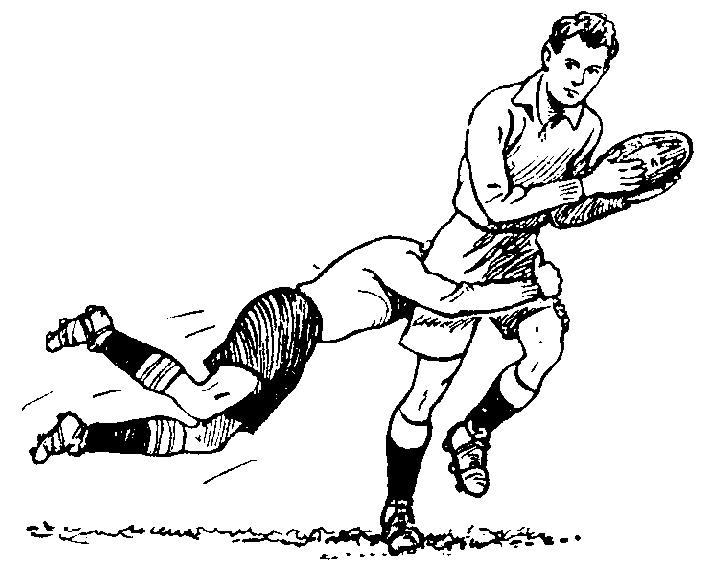
Placaje: Se produce cuando un jugador con el balón es sujetado por uno o más adversarios, derribándolo y el balón entra en contacto con el suelo. Para que se considere placado debe seguir agarrado. También se considera placado si está con una rodilla o las dos en el suelo o si esta sentado. En ese momento, debe transmitir la bola para evitar que se le pite 'retenido'.

Primera línea: Formado por los piliers y el talonador. Es la que choca contra la primera rival en la melé.

Pub: La parte más importante de un campo de rugby...

Off load: El juego de apoyo y transmisión. Cuando un jugador es placado, antes de caer y soltar la bola, la transmite (la pasa) continuando la jugada de ataque antes de que se produzca el agrupamiento. La fórmula es sencilla: avance, contacto y transmisión. Hacerlo es más difícil porque exige a tu equipo que siempre se acompañe la jugada para ofrecer un apoyo al jugador que lleva la pelota. Para mí el mayor especialista del rugby mundial es el flanker de Nueva Zelanda, su capitán, Richie McCaw.

Octavo: El último miembro de la delantera. Se dice que es el 8 es el primer tres cuarto y el último delantero. Es el más corpulento de los delanteros, pero debe ser dinámico y se encarga de apoyar a sus primeras líneas con su impulso. Corrige las deficiencias de esta y, cada vez, rompe más en ataque buscando el intervalo. Mervyn Davies, Brian Lochore, Zinzan Brooke, Dean Richards...

Segunda línea: Compuesta por dos jugadores, que se sitúan tras la primera línea en la melé. Son los jugadores más altos y aportan estabilidad y potencia al empuje en los agrupamientos. Además se encargan de disputar saltando los balones en la touch o line-out. Números 4 y 5, los lock en inglés y deuxeme ligne, en francés. John Eales, Victor Matfield, Colin Meads, Benoit Dauga, Willie John McBride, Frik Du Preez, Lucien Mias, Martin Johnson, Hill Beaumont.

Set Piece: Es un concepto que engloba a todos los aspectos del juego de delantera. El agrupamiento en sus diferentes versiones (melé, maul, rock) y el line-out. Los británicos hablan del “set-piece game” cuando analizan el trabajo de las delanteras.

Sin bin: Cuando el jugador ve la tarjeta amarilla es enviado al sin bin, zona de castigo o sanción, durante diez minutos.

Ruck: Si el balón está en el piso, y jugadores de ambos equipos están sujetándose en busca de la posesión del balón, esto se denomina un ruck.

Talonador: Es el jugador que se sitúa en el centro de la primera línea y recibe este nombre por ser el encargado de talonar el balón en la melé. Suele lanzar los balones en la touch o line-out, pero no es el único que puede (ojo). Su biotipo es parecido al de los pilieres. Tiene códigos propios con sus saltadores, los segundas, y es la primera vértebra de la columna vertebral de un equipo de rugby (2-5-8-9-10-15). Es el numero 2. Sean Fitzpatrick, Colin Meads, Keith Wood...

Tercer tiempo: El quid de la cuestión. El rugby es una excusa para celebrar el tercer tiempo. Momento en que departimos con los rivales, cerveza por medio. Lo que nos hace diferentes y lo que nos hace civilizados, aunque a veces alguno digiera mal tanto alcohol.

Tercera línea: La formada por los dos flankers y el octavo.

Tres cuartos: Los tres-cuartos realizan varias maniobras y combinaciones durante el juego a la mano para evitar los placajes rivales. En primer lugar están la tijera, cuando dos jugadores se cruzan permitiendo al que lleva el balón pasarlo a un compañero que corre en una dirección diferente. La finta es un movimiento para engañar al contrario amagando un pase y provocando que cubra a un jugador que no actúa en la jugada. El salto es cuando se evita pasar el balón al jugador más cercano y hacerlo a otro jugador más lejano para ganar velocidad o espacio buscando una zona libre del campo.

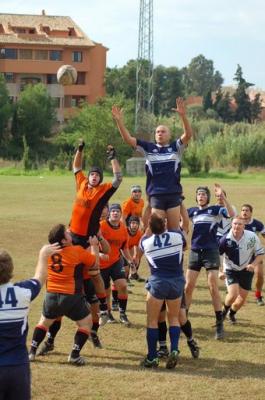
Touch (Line out): Cuando el balón sale fuera por la línea lateral los delanteros de cada equipo hacen una fila a la altura donde el juez de línea lo indique. Normalmente el talonador que no sacó el balón del terreno (a excepción de un puntapié penal) lanza el balón entre las dos líneas de delanteros. Los delanteros se ubican entre los 5 y los 15 metros de la línea lateral. El equipo que defiende (que no lanza el balón) pone el mismo número de jugadores en la touch. El que lanza el balón normalmente lo hace al segundo o cuarto saltador en el fila, que son usualmente los segundas líneas. Éstos son apoyados por sus compañeros para ganar altura sosteniéndolos por la cintura. Una vez que el jugador con el balón regresa al piso, se forma un maul para proteger el saltador. El capitán australiano John Eales era un especialista de esta suerte.

Ventaja: Es la posibilidad que el Reglamento otorga al árbitro de dejar discurrir el juego sin pitar una infracción seguida de una ventaja obtenida por el equipo no infractor. Consistirá en ganancia de terreno o en posesión del balón en condiciones que supongan una ventaja táctica evidente.

Zona de marca: El paraíso, el Dorado, la playa de Dakar… El sitio que todo jugador de rugby sueña. La zona rival en que se posa el balón para lograr los ensayos.

Zaguero: También llamados fullbacks o arrieres. El jugador número 15 debe tener mucha riqueza táctica y técnica. Debe leer los partidos, la forma de atacar de los rivales e incorporarse al ataque aprovechando las lagunas defensivas del adversario. Su patada es fundamental, especialmente la defensiva. Deben ser fuertes en el placaje y contundentes en la percusión porque son el último obstáculo entre el rival y la zona de marca propia. Gavin Hastings, JPR Williams, Matt Burke, Pierre Villepreux, Christian Cullen, Jason Robinson, Percy Montgomery, Juan Martín Hernández...

                            INGLÉS 

Display: This is when a team player who has the ball to a defender blocked. Something forbidden in the rules.

Pass: It is the movement of a ball player to another. It can be grilled (lanzándose at the same time) or spin (using dolls to turn the ball on its longitudinal axis looking for the longest distance).

Kick: Most of the kicks were to gain ground and usually occur out of the ground. But one can kick forward for a companion reach the ball before the contrary. All his colleagues have to be behind the pateador to fetch the ball. If it kicks the ball while following the line 22, the line-out or touch is back from where the ball went. If the ball is kicked remain ahead of the 22, it must play a game or a player before leaving for the line-out or touch is formed there. If there. Formed at the height of pateo. The exception is kicked by penalties (penalty kicks) which takes place in the line-out where the ball out no matter how.
Other kicking tactics are flush floor (so that three-fourths exploit the element of surprise at the time that the defense is running toward them in search of placaje), hats (autopases the shoulders of the opponent to break behind the line ) and height (to pressure the opponent allowing your fellow player to reach the waiting for the ball, called up and under). One of the players most recognized for his kicking was zaguero Scots Gavin Hastings

Pell-off: It occurs when one or more players left their position in the alignment (or line-out touch) with the aim of taking the ball has been passed or palmeado by one of its co-alignment.

Percussion: Gesture technical contact between a player who carries the ball and another dealing with frenarle defense.

Pilier: Are players outside of the front line. They must be very strong and tend to be heavier equipment. Numbers 1 and 3. Contrary to what many people think, piliers should have enough expertise in clusters (ways of pushing a melé, to form a rock collapse of a maul…). The piliers (pillars or prop) differ in the 1 (loose-head prop) and 3 (tight-head prop). Fran Cotton, Ian McLaughlan, Jason Leonard, Hugo McLeod. Recently, the school has Romanian and Georgian deparado large pillars.

Pick and go: It's a movement typically British game lead. When the superiority of your package is manifest strikers catch the ball and move until they are toppled. By fall, and another left the ball up and wins the meter until it collapsed one after another and so will win meters. Scotland, England, in particular, and Ireland, sometimes as often practice. Australia and South Africa also have done at times.

Tacke: This is when a player with the ball is restrained by one or more opponents, derribándolo and the ball comes into contact with the ground. In order to be considered placado must remain seized. It is also considered placado if it is a knee or both on the ground or whether this sitting. At that time, it must pass the ball to prevent him pite 'hold'.

First line: Formed by piliers and talonador. It is the first crashing against rivals in the melé.

Pub: The most important part of a rugby field ...

Load Off: The game support and transmission. When a player is placado, before falling and drop the ball, passes it (the pass) continuing to move attack before it happens grouping. The formula is simple: progress, and contact transmission. Doing so is more difficult because it requires your team that always accompany the move to offer support to the player who carries the ball. For me the biggest specialist rugby world is the flanker New Zealand captain Richie McCaw.

Eighth: The last member of the front. It is said that the 8 is the first three fourth and the last striker. It is the most corpulent of strikers, but it must be dynamic and is responsible for supporting their front lines with their momentum. It corrects the shortcomings of this and, increasingly, more breaks in attack looking for the interval. Mervyn Davies, Brian Lochore, Zinzan Brooke, Dean Richards ...

Second line: Composed of two players, which are located behind the front line in melé. They are the most senior players and provide stability and strength to push into clusters. Besides dealing with jumping contest balls in the line-out or touch. Numbers 4 and 5, the lock and deuxeme Reservation in English, French. John Eales, Victor Matfield, Colin Meads, Benoit Dauga, Willie John McBride, Frik du Preez, Lucien Mias, Martin Johnson, Beaumont Hill.

September Piece: It is a concept that encompasses all aspects of the game front. The grouping in its different versions (melé, maul, rock) and the line-out. The British talk of "set-piece game" when analyzing the work of the front.

Sin bin: When the player sees the yellow card is sent to the sin bin, an area of punishment or penalty, for ten minutes.

Ruck: If the ball is on the floor, and players from both teams are subject for possession of the ball, this is called a ruck.

Talonador: It is the player who is at the center of the first line and gets this name because it is responsible for talonar the ball in the melé. Often throw balls at the line-out or touch, but it is not the only one who can (eye). His biotype is similar to the pilieres. It has its own codes jumpers, the second and the first vertebra of the spine of a team rugby (2-5-8-9-10-15). It is the number 2. Sean Fitzpatrick, Colin Meads, Keith Wood ...

Third time: The crux of the matter. Rugby is an excuse to celebrate the third time. Time at which departimos with rivals, beer through. What makes us different and what makes us civilized, but sometimes any digiera wrong both alcohol.

Third line: The formed by the two flankers and the eighth.

Three quarters: tres-cuartos perform several maneuvers and combinations during the game at hand to avoid placajes rivals. First, there are the scissors when two players were allowed to cross carrying the ball pass it on to a colleague that runs in a different direction. La finta is a move to deceive the contrary amagando a pass and causing covering a player who does not act in the play. The fall is when you pass the ball prevents the player closest and make another player farthest to gain speed or space looking for a zone free of the field.

Touch (Line out): When the ball comes off the line by the front side of each team makes a row to the height where the linesman do so. Normally talonador not pulled the ball from the field (with the exception of a criminal kick) throws the ball between the two front lines. The strikers are located between 5 and 15 meters from the sidelines. The team that defends (which does not throw the ball) puts the same number of players in touch. Anyone who throws the ball normally makes the second or fourth jumper in the row, which are usually the second lines. They are supported by their peers to gain altitude sosteniéndolos by the waist. Once the player with the ball returns to the floor, it forms a maul to protect the jumper. The Australian captain John Eales was a specialist in this sort.

Advantage: It is the possibility that the regulation gives the referee let the game flow without pitar an infringement followed by an advantage gained by the non-offending team. This will gain ground or in possession of the ball in a position to pose a clear tactical advantage.

Zone brand: Paradise, the Gold, the beach Dakar… About every rugby player dreams. The area in which rival poses the ball to reach the trials.

Zaguero: Also known as fullbacks or arrieres. The player number 15 must have a lot of wealth tactic and technique. You must read the parties, how to attack rivals and join the attack taking advantage of the opponent's defensive shortcomings. His kick is crucial, especially defensively. They must be strong in the placaje and blunt on percussion because they are the last obstacle between the opponent and site of its own brand. Gavin Hastings, JPR Williams, Matt Burke, Pierre Villepreux, Christian Cullen, Jason Robinson, Percy Montgomery, Juan Martin Hernandez ...

Noticias para los Argentinos. (News for Argentines)

Pumas Rugby Club

Argentina
El Ayuntamiento de Barcelona le propuso a la UAR crear un club exclusivamente con jugadores argentinos. La idea es que juegue como local en esa ciudad, pero que actúe en la Liga francesa.
Mientras los dirigentes de la Unión Argentina de Rugby continúan haciendo gestiones para incorporar al seleccionado nacional, Los Pumas, a los torneos internacionales VI Naciones o Tres Naciones, el Ayuntamiento de Barcelona propuso una nueva y particular alternativa para los jugadores argentinos: “Los Pumas Rugby Club”.

                                        Inglés

The Barcelona City Council proposed to the UAR create a club exclusively with Argentine players. The idea is to play at home in that city, but serving in the French League.
While the leaders of the Argentina Rugby Union continue to make efforts to incorporate the selected national, Los Pumas, the VI Nations or international tournaments Three Nations, the Barcelona City Council proposed a new and particularly alternative to the Argentine players: "The Pumas Rugby Club. "

Obligada lectura.....

Obligada lectura.....

Señores "Jabalíes" y publico en general,  es importante que se lea todo esto, mañana publicaré otro artículo como este con más definiciones, como siempre en inglés también.

Sr. "Jabalíes "and the general public, it is important to read all this tomorrow publish another article like this with more definitions, as provided in English as well.


Ala: Jugadores más rápidos de la línea de tres cuartos que se alinean en los extremos de la misma. Buscan la profundidad en las jugadas de ataque y deben tener una buena recepción de balones del aire. Números 11 y 14. ¿Nombres? Campese, Lomu, Sella, JJ Willians, Gerald Davies, John Kirwan, Bryan Habana...

Anulado: Un jugador realiza un anulado cuando es el primero que toca en tierra dentro de su zona de marca.

Apertura: El 10. El hombre sobre el que gravita el juego. Para los ingleses es el fly half, para los franceses el demi-overture, para los neozelandeses el stand off. Es el jugador que determina los movimientos de los tres cuartos y del equipo en todo momento. Cuando recibe el balón del medio melé (srum-half o demi-melé) tiene varias opciones: correr, pasar el balón e  iniciar una jugada o patear el balón. Jonny Wilkinson, Barry John, Michael Lynagh, Phil Bennet, Jonathan Davies, Hugo Porta, Andrew Merthens...

Árbitro: Personaje que administra el reglamento y al que nunca, nunca, nunca se debe discutir una decisión. Está ayudado por los jueces de touch en las bandas y por el árbitro de televisión, que es a quien recurre en caso de duda siempre en jugadas de ensayo. Entre estos últimos es notoria la decisión que otorgó el pasado VI Naciones a los franceses con un ensayo de Vermeulen ante Escocia sin posar el balón en la zona de marca rival. Lo concedió el árbitro de TV y el principal lo dio por bueno. Quedó claramente demostrado que no era ensayo. Pero... nunca, nunca, nunca...

Avant: A veces el jugador pierde el balón tras el placaje, cuando recibe un pase o al recepcionar una patada rival. Si el balón cae hacia adelante, esta infracción se denomina avant. Si el equipo no infractor recoge el balón y aprovecha la ventaja, el juego continuará. Si no aprovecha la ventaja, el árbitro detiene el partido y ordena una melé donde el equipo no infractor pone en juego el balón. También se ordena una melé cuando se efectúa un pase hacia adelante (no intencional). El balón siempre tiene que pasarse en paralelo o hacia atrás.

Campo: Mide 100 metros de largo por 69 de ancho. Las líneas laterales se llaman líneas de touch y la zona de marca ("in-goal") está detrás de la línea de try. Esta zona debe tener entre 10 y 22 metros de profundidad. Los postes de gol se encuentran sobre la línea de try con una barra transversal a 3m de altura. Los postes tienen una separación de 5,6 metros. La altura de los postes depende del gusto del equipo local, pero se recomienda que sobrepase los 8 metros. A mitad de campo está la línea de mediocampo y dos líneas intermitentes a 10 mts. Además, está la línea de 22 (continua). Finalmente, hay líneas intermitentes a 5 y 15 paralelas a la línea de touch, para identificar donde se saca la touch.

Centros: Los tres cuartos se dividen en alas y centros. Estos últimos se reconocen por lucir las camisetas número 12 y 13. Son jugadores más potentes físicamente y con mayor poder de percusión para frenar las acometidas rivales y penetrar en la línea contraria con su potencia. Suelen dominar el juego de pie más específicamente que los alas, que están más especializados en el de mano. Tácticamente leen mejor los partidos que los alas y peor que los zagueros. Nombres: Mike Gibson, Tim Horan, Tana Umaga, Scott Gibbs.

Conversión: Patada posterior a la consecución del ensayo que vale dos puntos.

Delanteros: Los ocho jugadores involucrados en la lucha por el balón en las fases de conquista y agrupamientos, aunque también participan en la utilización del balón. Son grandes y fuertes para sus trabajos específicos. Se agrupan en primera (más pesados), segunda (altos) y tercera línea (pesados y altos).

Drop: Patada a palos en juego que se realiza a bote pronto y vale tres puntos, lo mismo que el golpe de castigo.  Dos drops han decidido finales de la Copa del Mundo. Uno del surafricano Joel Stransky en la del 95 y uno del inglés Jonny Wilkinson en la de 2003.

Ensayo: Un jugador marca un ensayo cuando posa la bola en la zona de marca adversaria. Su valor es de cinco puntos que pueden complementarse con dos más si se transforma la patada de conversión posterior. El ensayo de castigo se concede entre los postes cuando, sin una ocasión de antijuego del equipo defensor, un ensayo habría sido probablemente marcado. Se produce el antijuego cuando se realiza alguna acción contraria a las reglas y al espíritu del juego; incluyendo obstrucciones, juego desleal, incorrecciones, juego peligroso, comportamiento antideportivo, agresiones o faltas repetitivas. El Ensayo, con mayúsculas, fue convertido por los Barbarians en Cardiff en el año 1973 ante Nueva Zelanda en una jugada a l a mano de los Baa-Baas que posó el inimitable Gareth Edwards.

Flankers: Jugadores 6 y 7 del equipo. Miembros de la tercera línea. También llamados wing forwards o alas. Son los delanteros más dinámicos, fuertes y rápidos, pero contundentes en el choque porque son quienes se encargan de corregir y hacer las coberturas defensivas. Fuertes y rápidos son los últimos delanteros y los primeros tres cuartos. Suele decirse irónicamente que una buena melé siempre debe contar con un flanker psicópata. Serge Betsen, Fergus Slattery, Michael Jones, Neil Back, Dereck Quinnell, Lauren Rodríguez,  Richie McCaw.

Fases: Son las puestas del balón en juego tras una parada del mismo. La forma en que se hace está determinada por el tipo de detención y las indica el árbitro. Las fases dinámicas son cada una de las partes del juego en continuidad una vez superado el punto de encuentro entre el ataque y la defensa.

Fijar: Acción individual o colectiva para impedir a la defensa rival desplegarse. Se progresa con la pelota obligando al defensa a acudir al placaje y en el momento del mismo se trasmite la misma anulando la acción defensiva rival.

Fuera de juego: Cuando  se forma un ruck o un maul, se forman dos líneas imaginarias de fuera de juego (off-side) detrás del último jugador en el ruck o maul y van de una línea lateral a otra línea lateral. Cualquier jugador que esté por delante de su línea de off-side y no forme parte del ruck o maul se considera fuera de juego y puede ser penalizado si interviene directa o indirectamente en el juego. Si el fuera de juego se produce a una distancia razonable, el pateador rival puede patear a palos para obtener tres puntos. Los infractores tienen que ubicarse a 10 metros y no puede hacer ningún movimiento ni ruido. Si se convierte la patada, el juego se reinicia en la línea de los 50 metros con una patada de bote pronto (drop kick) del equipo que cometió la infracción. Si se falla la patada, el partido se reinicia en la línea de 22 con una patada a bote pronto (drop kick) del equipo infractor.

Infracciones: Las más frecuentes son el juego peligroso, interferencia, retenido y lanzarse sobre un ruck. El equipo beneficiado puede reiniciar el juego con una pequeño toque con el pie (pasando la marca) para iniciar una jugada o con una patada a la  banda (touch) para obtener un saque de banda (touch o line-out). En este saque de banda, el equipo que pateó el balón tiene el derecho de lanzar el balón nuevamente en el line-out. En las infracciones menores se otorga un free kick, que no se puede patear directamente a palos para ganar puntos.

Juez de touch: Asistente del árbitro en la banda.

Maul: Si el balón está en posesión de un jugador y este a su vez esta siendo sujetado por uno o más jugadores del equipo contrario, esto se denomina un maul.

Melé: La melé se forma cuando la primera línea está firmemente sujetada y el talonador ordena a la segunda línea que entre en formación. Los flankers se unen a cada lado de la segunda línea apoyando su hombro en la parte superior de la pierna. El 8 se une situándose entre las caderas de los segundas. Mientras que esto ocurre el capitán de los delanteros está indicando la próxima jugada y los tres cuartos están preparando el próximo movimiento, con señas o palabras claves. El equipo que no cometió la infracción introduce el balón en la melé, lo que permite al medio-melé coordinarse con el talonador para tener una ventaja sobre el equipo contrario. Si cualquiera de los talonadotes adelanta un pie antes de que el balón sea introducido, es penalizado. Una vez que el balón entra al túnel formado entre las dos delanteras cada equipo empuja al adversario hacia su línea de gol. Si el balón es ganado, el medio-melé recibe el balón del 8 y puede pasarlo a los tres cuartos, patearlo o ganar terreno con un ataque de tercera línea. El medio-melé contrario estará atento a ganar cualquier balón producto de un error contrario. Con frecuencia, el octavo se levanta d ela melé con el balón para iniciar un ataque por sí mismo.

Medio melé: Es, junto con el apertura, el cerebro del equipo. Por sus manos pasan muchos balones. Deben estar dotados de una buena forma física, ser rápidos en la toma de decisiones y tener una técnica depurada. Dirige el juego de los delanteros, situándose normalmente tras ellos y dirigiendo su juego con órdenes en clave. Además enlaza el juego con los tres cuartos por lo que se puede considerar que es la bisagra del equipo. Luce el número 9. Gareth Edwards (el mejor jugador de todos los tiempos, dicen) Fourie Du Preez, Nick Farr-Jones, Joost Van der Westhuizen, Syd Going, George Gregan, meter Stringer.

                                                    INGLÉS

Wing: Players fastest line three quarters to be aligned at the ends of the same. Looking for depth in the moves to attack and should have a good receiving air balls. Numbers 11 and 14. Does Names? Campese, Lomu, Sella, JJ Willians, Gerald Davies, John Kirwan, Bryan Habana ...

Voided: A player makes a annulled when it is the first to touch on land within its area of trademark.

Opening: 10. The man that weighs on the game. For the English is the fly half, for the French the demi-overture for New Zealanders stand off. It is the player who determines the movements of three quarters and equipment at all times. When you receive the ball environmental melé (srum-half or demi-melé) has several options: run, pass the ball and start a game or kick the ball. Jonny Wilkinson, Barry John, Michael Lynagh, Phil Bennett, Jonathan Davies, Hugo Porta, Andrew Merthens ...

Referee: Character administered by the rules and never, never, never should discuss a decision. It's helped by the touch judges in bands and the TV umpire, who uses it when in doubt always played test. The latter is notorious decision that awarded the last VI Nations to the French with a test before Vermeulen Scotland without posing the ball in the area of brand rivals. The referee awarded the TV and gave it to the main good. It was clearly demonstrated that there was no trial. But ... Never, never, never ...

Avant: Sometimes the player loses the ball after placaje, when you receive a pass or receiving a kick opponent. If the ball falls forward, this offense is called avant. If the team did not receive the offending ball and avail the advantage, the game will continue. If you do not take advantage, the referee stopped the match and ordered a melé where the team non-infringing puts the ball in play. It also orders an melé time of a pass forward (unintentional). The ball always has to spend in parallel or backward.

Course: It measures 100 meters long by 69 wide. The lines are called lateral lines and touch the area mark ( "in-goal") is behind the try line. This area must be between 10 and 22 meters deep. The goal posts are on the try line with a cross bar to 3m high. The posts have a separation of 5.6 meters. The height of the posts depends on the taste of the local team, but it is recommended that exceeds 8 meters. Mid-field is the midfield line and intermittent two lines to 10 meters. In addition, there is the line 22 (continuous). Finally, there are intermittent lines at 5 and 15 parallel to the line of touch to identify where it takes the touch.

Centers: The three rooms are divided into wings and centers. The latter is recognized by wearing the shirts numbers 12 and 13. They are physically stronger players and more power to curb percussion Rush rivals and penetrate to the contrary with his power. They tend to dominate the game of foot more specifically the wings, which are more specialized in hand. Tactically read better matches the wings and worse than zagueros. Names: Mike Gibson, Tim Horan, Tana Umaga, Scott Gibbs.

Conversion: Penalty kick after achieving the trial is worth two points.

Forwards: The eight players involved in the fight for the ball at stages of conquest and groupings, but also involved in the use of the ball. They are big and strong for their specific work. They are grouped into first (heavier), second (senior) and third line (heavy and high).

Drop: Penalty kick a game that sticks in a pot is worth three points and soon, like the blow of punishment. Two drops have decided end of the World Cup. One of the South African Joel Stransky in the 95 and one English Jonny Wilkinson in the 2003 session.

Essay: A player marks a trial when the ball rests in the area of brand adversary. Its value is five points which can be supplemented by two more if it becomes the kick conversion later. The trial of punishment is awarded between the posts when, without a chance to antijuego the defending team, a trial would probably have been flagged. This marks the antijuego when undertaking any action contrary to the rules and spirit of the game, including obstruction, unfair play, improprieties, dangerous game, unsportsmanlike conduct, assault or misconduct repetitive. The essay, with capital letters, was converted by the Barbarians in Cardiff in the year 1973 to New Zealand in a play-hand wing of Baa-Baas that posed the inimitable Gareth Edwards.

Flankers: Players 6 and 7 of the team. Members of the third line. Also called wing forwards or wings. Strikers are more dynamic, strong and quick, but strong in the crash because they are responsible for correcting and defensive coverages. Loud and fast are the latest front and the first three quarters. Ironically often said that a good melé should always have a flanker psychopath. Serge Betsen, Fergus Slattery, Michael Jones, Neil Back, Dereck Quinnell, Lauren Rodriguez, Richie McCaw.

Phases: They put the ball in play after a stoppage of the same. The way that is done is determined by the type of detention and indicated the referee. The phases are dynamic each side of the game in continuity once passed the point of encounter between the attack and defense.

Set: Action individually or collectively to prevent the rival defense deployment. There is progress with the ball forcing the defense to come to placaje and at the same transmitting the same action canceling defensive opponent.

Outside game: When is a ruck or maul, formed two lines imaginary offside (off-side) behind the last player in the ruck or maul and go from one line to another side lateral line. Any player who is ahead of his line off-side and is not part of the ruck or maul is considered offside and can be penalized if it intervenes directly or indirectly in the game. If the offside occurs at a reasonable distance, pateador rivals can kick with sticks to get three points. Violators must be placed at 10 meters and could not make any movement or noise. If he becomes the kick, the game was restarted in line with the 50 meters with a kick boat soon (drop kick) team that committed the offense. If it fails kick, the game restarts in line 22 with a pot kick in soon (drop kick) Team wrongdoing.

Offenses: The most common are dangerous play, interference, and embark on a retained ruck. The team benefited can restart the game with a little tap with the foot (the passing mark) to start a play or a kick to the band (touch) to get a kick Banda (touch or line-out). In this thrown, the team that kicked the ball has the right to throw the ball back into the line-out. In minor violations were awarded a free kick, which can not be directly sticks kick to earn points.

Judge touch: Assistant referee in the band.

Maul: If the ball is in possession of a player, and this in turn is being restrained by one or more players of the opposing team, this is called a maul.

Melé: melé is formed when the first line is firmly fastened and talonador orders to the second line in between training. The flankers bind to each side of the second line to support his shoulder at the top of the leg. The 8 joins a position between the hips of the latter. While this happens the captain of the forwards is predicting the next move and three-fourths are preparing the next move, with signs or keywords. The team did not enter the offense the ball in the melé, allowing the medio-melé coordinated with the talonador to gain an advantage over the opposing team. If any of the talonadotes forward one foot before the ball is introduced, it is penalized. Once the ball enters the tunnel formed between the two front each team pushes toward his opponents goal line. If the ball is won, medio-melé receives the ball from 8 and can pass it on to three-fourths, patearlo or gain ground with a third line of attack. The medio-melé contrary will be attentive to win any ball product of an error otherwise. Often, the eighth rises d ela melé with the ball to start an attack by itself.

East melé: It, along with the opening, the brain of the team. By their hands spend many balls. They must be provided with a good physical form, be quick in making decisions and having a polished technique. Directs the game from the front, usually staying behind them and directing their game with key orders. Besides linking the game with three-fourths of what can be considered is the hinge of the team. Luce number 9. Gareth Edwards (the best player of all time, say) Fourie Du Preez, Nick Farr-Jones, Joost van der Westhuizen, Syd Going, George Gregan, meter Stringer.

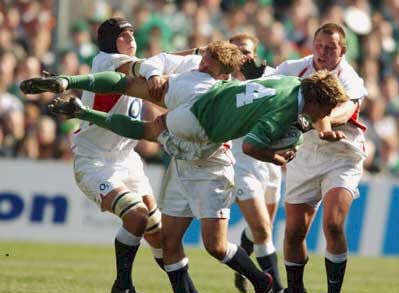
Nueva victoria del Axarquía.

Nueva victoria del Axarquía.

Nuestros amigos de  la Segunda División Andaluza, juego es fin de semana contra UMA B, con una victoria más para el quipo, felicidades otra vez y  mucha suerte.

Resultado.

 C. D. Axarquía Rugby 18 - UMA B 5

                                                              Inglés

Our friends in the Second Division Andalusian game is weekend against AMU B with a victory for the teams, congratulations again and good luck.

Score.

  C. D. Axarquía Rugby 18-AMU B 5

Superhombres no, pero casi (Not Superman, but almost)

Superhombres no, pero casi (Not Superman, but almost)


La inclusión de la Rugby World Cup 2007 en la escena deportiva mundial está evidenciando un concepto de deporte que a muchos sorprende por el nivel de intensidad de juego que se mantiene a lo largo del encuentro, en el que puede considerarse el referente de los deportes colectivos de contacto. Este torneo obliga a la selección capaz de levantar la Web Ellis Cup a jugar los siete partidos que le separan del primer enfrentamiento con la final en 44 días de campeonato. Se trata de un acontecimiento de tal dimensión que lo catapulta a unos niveles de difusión e impacto comparables a los grandes eventos deportivos de nuestra era (Mundial de Fútbol, Juegos Olímpicos y Tour de Francia).

Las exigencias de entrenamiento y competición del rugby profesional requieren que los jugadores se sometan a situaciones extremas. Un jugador de la liga inglesa o francesa disputa alrededor de 30-40 partidos por temporada (pueden sobrepasar los 50 en el caso de los internacionales). Para ello las temporadas se prolongan a lo largo de 47 semanas de intensiva preparación, lo que deja al jugador con unas escasas 4 o 5 semanas vacacionales (aunque no de descanso, puesto que se les exige seguir los rigurosos planes individualizados diseñados por los preparadores físicos).

Con tales requerimientos, la planificación del trabajo busca el equilibrio entre el entrenamiento necesario para seguir mejorando física, técnica y tácticamente y la recuperación fisiológica y psíquica del jugador, para que pueda alcanzar el punto óptimo de forma.

EXIGENCIAS DE LA COMPETICIÓN

El rugby es, en esencia, un juego de invasión del espacio, lo que conlleva un nivel elevadísimo de permisividad del contacto que hay que estar dispuesto a aceptar y asumir en todo momento. La propia dinámica del juego obliga a que los atacantes y defensores que se encuentren en un punto determinado desarrollen una pequeña batalla por la posesión del balón o el avance metro a metro. Es precisamente el contacto en el juego el que actúa como un imán que atrapa y ejerce una atracción difícil de explicar para los más de tres millones de jugadores que hay en el mundo.

Choques, luchas y saltos: más de 300 acciones de contacto individual que se reparten entre percusiones, placajes, agarres, arrancadas de balón, saltos y levantamientos de jugadores. Consecuencia de este gran abanico de situaciones de contacto es que la preparación física del jugador profesional requiere entrenamientos orientados a aumentar y reforzar la musculatura de los jugadores. Hasta tal punto es importante el trabajo de musculación que en los últimos 10 años el Índice de Masa Corporal, el peso y la talla de los jugadores se ha incrementado hasta una tasa dos veces superior que el promedio de todo el siglo pasado.

Agrupamientos espontáneos: considerado por los analistas como una referencia de la continuidad del juego, los agrupamientos espontáneos superan los 170 por partido. Tradicionalmente un trabajo reservado a los delanteros, hoy por hoy se considera que todos los jugadores deben entrenar y mejorar su participación en estas situaciones del juego. En términos técnicos se puede destacar que la calidad del primer contacto es determinante para seguir avanzando y asegurar la disponibilidad del balón.

Formaciones ordenadas: Las melés constituyen, junto con el ensayo, uno de los elementos más distintivos del juego. En un partido de elite se suceden alrededor de 20 melés, que formadas por dos grupos de 8 jugadores rondan los 2.000 kgs de enfrentamiento directo de masa humana. Considerada la máxima expresión de la fuerza colectiva, los terceras líneas son los responsables de la estabilización de las fuerzas, los segunda líneas los que generan y los primeras líneas los que la transmiten.

Desplazamientos: durante los casi 40' de tiempo real de juego un jugador recorre unos 8 kms., combinando diferentes acciones: cambios de pie, cambios de ritmo, cambios de dirección, sprints y trote. En el juego debe mantenerse una constante: la velocidad del jugador debe aumentar en la misma medida en la que se aproxima al balón. Por ello, puesto que se requieren muchos desplazamientos explosivos, las intensidades a las que deben entrenar los jugadores son muy elevadas.

Pases y lanzamientos: no todos los jugadores participan directamente sobre el balón con la misma frecuencia, pero deben estar preparados para ser efectivos en cuanto les llegue (quizás sea sólo una o dos veces durante el partido). Alrededor de 280 pases por partido y unos 30 lanzamientos en el lateral. El entrenamiento se fundamenta en un trabajo de mucha precisión, donde el objetivo se orienta a la resistencia a la fatiga puesto que ésta determina la calidad de uno de los binomios indisolubles: pase-recepción

Puntapies: Existen varias formas de patear el balón (entre los 50 y 70 por partido: de volea, de bote pronto, raso, plantado, etc.) que pueden ser realizados por cualquier jugador. No obstante, en el alto nivel, estas acciones acostumbran a estar reservadas a unos pocos elegidos en cada equipo. Tres razones justifican la especialización del pateador: la posibilidad de conseguir puntos (bote pronto y plantado), el hecho de seguir avanzando en el espacio y el elevadísimo nivel de exigencia que implica un puntapié para la estructura músculo-esquelética del jugador.

Las exigencias impuestas por la competición llegan a tales niveles que obligan a técnicos de equipos de elite a gestionar plantillas formadas por 35-40 jugadores, de ninguna otra manera puede finalizarse una temporada competitiva con garantías de éxito.

LA RECUPERACIÓN

Finalizar un partido ya es, en sí mismo, una gesta épica. Si bien es cierto que al final de la contienda un sinfín de sensaciones dolorosas acompañan a los jugadores al vestuario, en sus cuerpos emergen las molestias ocasionadas por los golpes y aplastamientos recibidos y que van despertando en forma de magulladuras, contusiones, torceduras, hematomas, etc.

Los estudios más recientes sobre la incidencia lesional indican que las lesiones musculares en el muslo son las más comunes en el rugby, seguidas de las que afectan a la articulación de la rodilla (en los tres cuartos) y la articulación del hombro (para los delanteros). De este modo los estudios concluyen que las situaciones de juego más susceptible de provocar una lesión son las de placaje y de colisión entre jugadores.

No obstante, no son tan frecuentes las lesiones que obliguen a los jugadores a permanecer en reposo y perderse entrenamientos o partidos. Sus cuerpos están preparados y acostumbrados a jugar y entrenar con molestias que para otros deportistas serían poco más que insufribles. Por ello, los medios de recuperación del jugador se erigen como una pieza fundamental integrada en el proceso de entrenamiento. Entre las técnicas más extendidas en la elite profesional cabe destacar:

La alimentación: como promedio estándar un partido de rugby puede requerir unas 600 kilocalorias (500 kcal. en fútbol, 651 kcal. correr 10 kms), pero hay que sumarle el desgaste energético que implican las situaciones de contacto y lucha, lo que nos aproxima a las 1.000 kilocalorias por partido. De esta forma, las dietas muy ricas en hidratos de carbono y conseguir una rapidísima reposición de sustratos y líquidos tras los partidos y entrenamientos son esenciales en el alto nivel.

Medios de recuperación:

Crioterapia: baños parciales o completos sumergidos en hielo, sus beneficios de asocian al efecto antiinflamatorio de las bajas temperaturas.

Baños de contraste: que combinan inmersiones en agua fría seguidas de inmersiones en agua caliente, y que tienden a mejorar el flujo sanguíneo y, por lo tanto, a regenerar las zonas musculares dañadas.

Masajes: quizás de las más efectivas y antiguas técnicas de recuperación, a la que debe asociarse el efecto de relajación psíquica.

Ejercicios aeróbicos: aconsejables en las 24 horas siguientes al partido, puesto que facilita la eliminación del lactato acumulado. Puede ejercitarse de múltiples formas, desde ejercicios sin contacto hasta el aqua-aerobic .

Tiempo libre: recientemente considerado como fundamental para la sostenibilidad de la vida del jugador profesional. Un jugador feliz es un jugador predispuesto a alcanzar mayores niveles de rendimiento.

Permítanme un apunte final, algo que subyace por encima de lo que emerge en un terreno de juego y que afecta a la propia esencia de este deporte. Que el rugby se consolide como un juego dinámico y seguro es algo que está escrito y se encuentra en las reglas del juego. Pero la capacidad de sobreponerse a la exigencia física del juego, a luchar junto al compañero hasta la extenuación y oponerse al adversario incluso con dolor, esto sólo se encuentra en lo más interno del jugador de rugby, y les aseguro que no importa que sea profesional

                        Inglés

The inclusion of Rugby World Cup 2007 on the international sports scene is showing a concept of sport that many surprised by the level of intensity of the game that is maintained throughout the meeting, which can be considered the benchmark of sports contact. This tournament requires the selection capable of lifting the Web Ellis Cup to play seven matches that time from the first clash with the final 44 days of the tournament. This is an event of such dimension that it catapult to a level of outreach and impact comparable to the great sporting events of our era (World Cup, Olympics and the Tour de France).

The demands of training and competition require that professional rugby players were subjected to extreme situations. A player in the league English or French dispute about 30-40 games per season (may exceed 50 in the case of international). This season drags along 47 weeks of intensive preparation, which leaves the player with a rare 4 or 5 weeks holiday (though not rest, as they are required to follow the rigorous individualized plans designed by physical preparers ).

With such requirements, work planning looking for a balance between training necessary to further improve physically, technically and tactically, and the physiological and psychological recovery of the player, enabling it to reach the peak of form.

REQUIREMENTS OF THE COMPETITION

Rugby is, in essence, a game of space invasion, which carries a high level of permissiveness of the contact you have to be willing to accept at all times. The very dynamic of the game requires that the attackers and defenders who are at some point develop a small battle for possession of the ball or the progress meter to meter. It is precisely the contact in the game which acts as a magnet that traps and exerts a pull difficult to explain to the more than three million players in the world.

Shocks, struggles and jumps: more than 300 actions of individual contact that are shared between percussion, placajes, grabbing, dragged from ball jumps and uprisings players. One consequence of this wide range of situations of contact is that the player's physical preparation requires professional training aimed at enhancing and strengthening the muscles of the players. So much so it is important that the work of bodybuilding in the past 10 years, the Body Mass Index, the weight and size of the players has increased to a rate two times higher than the average throughout the last century.

Groups spontaneous: regarded by analysts as a reference to the continuity of the game, spontaneous clusters exceed 170 per game. Traditionally a job reserved for strikers today it is considered that all players must train and improve their participation in these situations of the game. In technical terms can be noted that the quality of first contact is crucial to move forward and ensure the availability of the ball.

Training ordered: melés, together with the trial, one of the most distinctive elements of the game. In a party elite occur around 20 melés, which consist of two groups of 8 players around the 2,000 kgs of direct confrontation of human mass. Considered the ultimate expression of the collective strength, the third lines are responsible for stabilizing forces, the second lines that generate and the first lines that transmit.

Displacement: during the nearly 40 'real-time game player runs about 8 kms. Combining different actions: changes stand, changing pace, changing direction, sprints and jogging. In the game must remain constant: the speed of the player must increase to the same extent in which it has approached the ball. Therefore, since they require many movements explosives, the intensity with which they train the players are very high.

Pass and releases: not all players involved directly on the ball with the same frequency, but must be prepared to be effective as soon as they arrive (perhaps only once or twice during the match). Around 280 passes per game and about 30 pitches on the side. The training is based on a work of great precision, where the objective is geared towards fatigue resistance because it determines the quality of one of the indissoluble binomials: pase-recepción

Puntapies: There are several ways to kick the ball (between 50 and 70 per game: volley, boat soon, satin, planted, and so on.) That may be made by any player. However, the high-level, these actions are usually reserved for a select few in each team. Three reasons specialization pateador: the ability to get points (boat early and planted), the fact move in space and the very high level of demand which implies a kick for the structure músculo - esquelética player.

The demands imposed by the competition reach such levels that require technical elite teams to manage templates comprising 35-40 players, in any way can complete a season competitive with guarantees of success.

RECOVERY

Finish a game and is, in itself, an epic. While it is true that at the end of the race endless painful sensations accompany players to dress, in their bodies emerge for the inconvenience caused by the crushing blows and received and ranging awakening in the form of bruises, bruises, sprains, bruises, etc..

The most recent studies on the incidence indicate that the lesion in the thigh muscle injuries are the most common in rugby, followed by those that affect the knee joint (three-fourths) and the articulation of the shoulder (for strikers ). Thus studies conclude that the situations in the game more likely to cause an injury are those of placaje and collisions between players.

However, they are not as frequent injuries that force players to stay at rest and miss workouts or games. Their bodies are prepared and used to train and play with inconvenience for other athletes would be little more than unbearable. Thus, the means of recovery Player posed as a key element integrated in the training process. Among the most prevalent in the elite professional include:

The food: an average standard of a match rugby may require about 600 kilocalories (500 kcal. In football, 651 kcal. Run 10 kms), but we must add wear energy situations involving contact and fight, which brings us the 1,000 kilocalories per game. Thus, diets rich in carbohydrates and get a very rapid replacement of liquid substrates and after matches and training are essential in the high level.

Means of recovery:

Cryotherapy: bathrooms partial or complete immersion in ice, its benefits associated with the anti-inflammatory effect of low temperatures.

Bathrooms contrast: combining dives in cold water followed by dives in hot water, and they tend to improve blood flow and, therefore, to restore areas damaged muscle.

Massage: perhaps the oldest and most effective techniques for recovery, which should join the effect of mental relaxation.

Aerobic Exercise: advisable in the 24 hours following the party, as it facilitates the removal of lactate accumulated. You can exercise in many ways, from years without contact until aqua-aerobic.

Leisure recently seen as crucial for the sustainability of life of the professional player. A happy player is a player predisposed to reach higher levels of performance.

Allow me one final point, something that underlies above what emerges in a playground and that affects the very essence of the sport. To consolidate rugby as a game dynamic and secure is something that is written and is in the rules. But the ability to overcome the physical demands of the game, to fight alongside the companion to the sheer oppose the adversary even with pain, it is only at the internal rugby player, and I can assure you that no matter who is professional


Partido el Sabado.

Partido el Sabado.

Hola amigos, este sábado volvemos a jugar Rugby en Cortes de la Frontera, a las 19H, (Campo de fútbol).
Llevar las dos camisetas, para poder hacer dos equipo bien diferenciados, vendrá un medico y arbitro.
                               
Inglés

Hello, this Saturday again play rugby Cortes de la Frontera, at 19H, (soccer field).
Wearing two shirts, in order to make two distinct team, will be a doctor and referee.


Atención al peazo de equipo de feminas.

Atención al peazo de equipo de feminas.

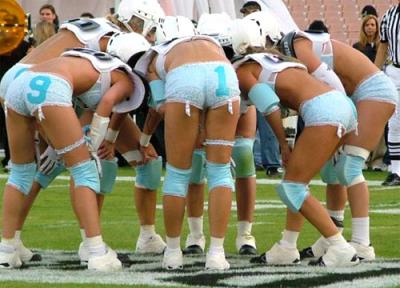
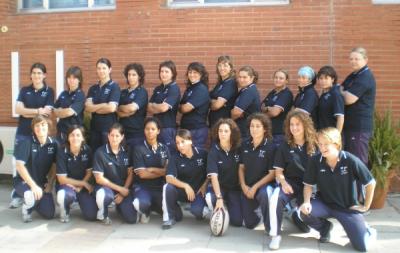
Hola amigos, aquí os dejo esta foto de un "equipo de rugby", con equipación, un buen número y jugando de verdad, es todo un ejemplo a seguir.
Podréis ver la Sra. arbitro y Sra. auxiliar que nos pito en Vélez contra Axarquia.
Hay que entrenar duro y todos los días para poder jugar en liga el próximo año.

                           Inglés

Hello friends, here I leave with you this picture of a rugby team, "with equipment, a good number and playing really, it's all an example to follow.
You can see Mrs. Referee & Ms. We pito assistant at Axarquia against Velez.
We must train hard and every day to play in the league next year.

Victoria del Axarquía Rugby en Marbella (Victoria's Rugby Axarquía in Marbella)

Victoria del Axarquía Rugby en Marbella (Victoria's Rugby Axarquía in Marbella)

El Axarquía gana al Marbella B (8-14)
El C. D. Axarquía Rugby logró ayer domingo su primera victoria de la temporada en la liga de Segunda División andaluza. Los jugadores entrenados por Alberto del Pino, que ayer disputó además todo el encuentro como apertura, lograron una trabajada victoria, que se basó en su solidez defensiva.
Y es que los axarcos saltaron al terreno de juego del Bahía Marbella sin ideas en ataque. La primera mitad fue de dominio marbellí, si bien la concentración en el placaje y en frenar los ataques del Marbella hizo que se llegara al descanso con 3-3 en el marcador, merced a sendos golpes de castigo transformados.
Segundo periodo
La segunda mitad cambió el panorama. De entrada, un ensayo de Ricardo puso en ventaja a los de la comarca más oriental de la provincia (3-8), y dos tiros a palos anotado por un acertado Del Pino distanciaron aún más al Axarquía en el marcador (3-14).
Faltando diez minutos para la conclusión, una jugada del paquete de delanteros del Marbella R. C., con un brillante maul que dio lugar a sucesivos tornillos, finalizó con ensayo
(8-14). Desde aquí hasta el final del partido, los locales trataron de lograr el ensayo que les hubiera dado la victoria, pero los axarcos volvieron a fajarse en defensa y lograron un triunfo muy importante de cara a sus aspiraciones esta temporada.
A destacar, la deportividad mostrada por ambas escuadras, que tuvo continuidad en el tercer tiempo, y en la que el buen arbitraje de José Cristóbal Pérez Escolano (Pepe Melilla) también tuvo mucho que ver.
Dos juveniles, con la andaluza.Por otra parte, el propio Escolano, seleccionador andaluz de juveniles, confirmó ayer a los responsables del Axarquía la convocatoria de dos de sus jóvenes valores (Javi y Cristian) para una preselección de la selección de Andalucía juvenil que se celebrará esta misma semana en Sevilla. Otra buena noticia, en suma, para un fin de semana redondo para el Axarquía.
                                                                     (Ingles)
The Axarquía wins at Marbella B (8-14)
C. D. Axarquía Rugby succeeded yesterday Sunday its first victory of the season in the Second Division league Andalusian. The players trained by Alberto del Pino, which yesterday also played throughout the meeting as an opening, worked achieved a victory, which was based on its defensive strength.
And is that axarcos jumped into the field of play without Marbella Bay ideas in attack. The first half was the domain Marbella, while the concentration in the placaje and curb the attacks of Marbella was to reach the rest with 3-3 on the scoreboard, thanks to two strokes punishment processed.
Second period
The second half changed the picture. First, a trial of Ricardo set advantage to the easternmost region of the province (3-8), and two shots with sticks annotated by a wise Del Pino distanced further the Axarquía on the scoreboard (3-14) .
Faltando ten minutes for the conclusion, a move the package front of Marbella R. C., with a bright maul which led to successive screws, finished with test
(8-14). From here until the end of the game, tried to reach the local trial that would have given them the victory, but axarcos again fajarse defense and achieved a victory very important for their aspirations this season.
To highlight the sportsmanship displayed by both squads, which had continued for the third time, and in that good arbitrage Jose Cristobal Perez Escolano (Pepe Melilla) also had a lot to do.
Two juveniles, the andaluza.Por Furthermore, the very Escolano, Andalusian coach of youth, confirmed yesterday those responsible for the Axarquía the convening of two of its young securities (Javi and Cristian) for a pre-selection of Andalusia youth this week will be held in Seville. Another good news, in short, for a weekend round for the Axarquía.

Saludos y recuerdo para Felipe.

Saludos y recuerdo para Felipe.

Hola Felipe, esperamos que no te lo estes pasando muy bien, jijiji, es broma. te deseamos lo mejor, espero que desde Hong Kong, te acuerdes de nosotros. Nosotros mucho de ti.

Esta foto esta dedicada para ti. Tu equipo de Rugby.

Hello Philip, we hope that this does not get it going very well, jijiji, kidding. We wish him well, I hope that Hong Kong, thou art mindful of us. We greatly from you.

This picture is dedicated to you. Your team rugby.

Los "Jabalíes" se presentan

Los "Jabalíes" se presentan

Es un pajaro, es una avión........., cuando corre nos preguntamos si realmente tiene piernas. Juega con el nº 11.

Los "Jabalíes" se presentan

Los "Jabalíes" se presentan

Le pone muchas ganas y empeño, cada dia mejora, juega con el nº 20, casi siempre de 1ª linea.

Los "Jabalíes" se presentan

Los "Jabalíes" se presentan

Rápido, fuerte y cada dia mas, juega con el nº 22.

Los "Jabalíes" se presentan

Los "Jabalíes" se presentan

Creemos que lo tiene todo...juega con el nº15.

Los "Jabalíes" se presentan

Los "Jabalíes" se presentan

Ademas de rapido, duro, juega con el nº 14. no le importa el lado, siempre esta donde se le necesita.